Golf Cart Battery Charger Types Explained Clearly
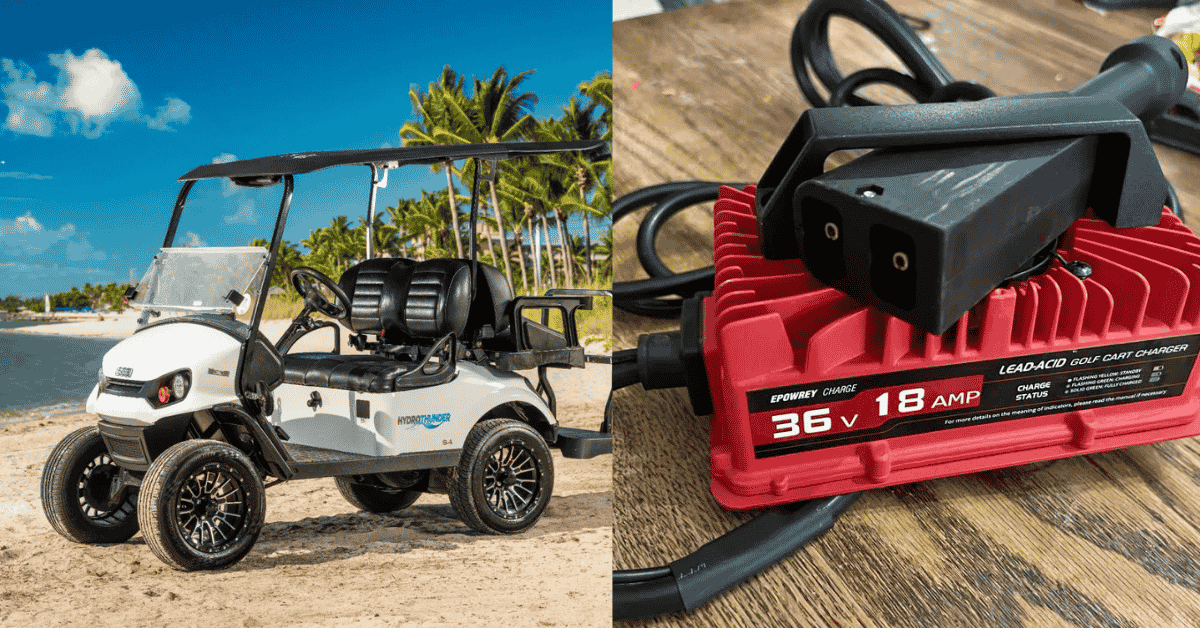
A golf cart battery charger seems simple. Plug it in, hook it to the cart, walk away. That’s what I figured too until I actually went shopping for a golf cart battery charger and found a whole mess of options staring back at me. 36-volt. 48-volt. Lithium. Lead-acid. Automatic. Portable. Onboard. Half of them look basically identical on the shelf, and yet each golf cart battery charger is built for a totally different battery setup. Grab the wrong one and best case, it charges slow. Worst case? You’ve quietly ruined a battery pack that cost you real money.
Let’s just go through it properly.
Voltage. Check This First.
Before anything else brands, features, price, whatever figure out if your cart’s a 36-volt or 48-volt system. This decides everything downstream, including which golf cart battery charger you actually need.
Older carts, mostly 36 volts. Newer ones, usually 48. And here’s the part people get wrong constantly: that number is the whole pack added together, not one battery by itself.
Six batteries at 6 volts each, wired up? That’s 36 total. Swap to six 8-volt batteries and suddenly you’re sitting at 48.
Why Matching Voltage Matters So Much
Match it exactly. Don’t ever run a 48-volt charger on a 36-volt pack I can’t stress this enough. You’d be forcing more voltage than those batteries can handle, and that’s how you get overheating, or worse, batteries that just die early.
Not sure what you’ve got? Battery labels usually say. Manual works too if you still have it lying around somewhere.
36-Volt Golf Cart Battery Chargers
A 36-volt golf cart battery charger pairs with older Club Car, EZGO, Yamaha carts mostly. And there’s more of these carts still running than you’d think plenty of people are still out there on 36-volt systems, doing fine, using them for golf courses, neighborhoods, casual driving.
How fast it charges depends on a few things battery condition, what the charger actually puts out, how drained the pack was going in. A healthy set of batteries, no drama, charges the way it’s supposed to. Older, tired batteries though? Could take way longer. Might not even hit a full charge anymore, no matter how patient you are.
One thing that trips people up just because a plug fits doesn’t mean you’ve got the right charger. Battery type matters. Connection style matters. Not just “does it physically plug in.”
48-Volt Golf Cart Battery Chargers
A 48-volt golf cart battery charger pairs with 48-volt packs, which is what a lot of newer carts run these days. Better acceleration, more range, generally more efficient that’s the trade you’re making by going 48.
Here’s the catch though, and it’s an easy one to miss. A 48-volt cart might be running regular lead-acid batteries. Or it might have a single lithium pack instead. Sounds like a small detail. It’s not.
Lead-Acid vs Lithium at 48 Volts
A charger built for 48-volt lead-acid isn’t necessarily safe for 48-volt lithium even though the voltage matches perfectly on paper. What’s actually happening inside, how the power gets delivered, that’s where they differ.
So don’t just check voltage when buying a replacement golf cart battery charger. Check chemistry too. Check the plug. All three, every single time skipping one is how people end up with the wrong charger.
Lead-Acid Golf Cart Battery Chargers
Lead-acid’s been the standard in golf carts forever, basically. Cheap. Easy to find pretty much anywhere. But it asks more of you more upkeep than lithium, no way around that.
A lead-acid golf cart battery charger works in stages, usually. Comes in strong at first, then backs off as the pack fills up, and most newer ones will just cut off on their own once it’s done. You’re not really babysitting it, not with modern units anyway.
Don’t forget flooded lead-acid batteries need their water levels checked. Regularly. Let that water drop too low and the plates get exposed, and charging exposed plates? That’s basically guaranteed damage.
Also AGM and gel batteries count as lead-acid too, technically, but they sometimes want a different charging profile. So don’t just assume any lead-acid charger works with any lead-acid battery. It’s not that simple.
Lithium Golf Cart Battery Chargers
Lithium’s the newer stuff lighter, charges quicker, tends to last longer, barely needs maintenance. Sounds great. It is great, mostly. But there’s one non-negotiable: you need a golf cart battery charger made specifically for lithium. Nothing else will do.
How a Lithium Charger Actually Works
A proper lithium charger is basically talking to the battery’s BMS battery management system the whole time it’s charging. That system’s watching temperature, voltage, general health. Something looks wrong too hot, too cold, some fault and the BMS just shuts the charge down. No warning needed.
Using an old lead-acid charger on lithium batteries? Risky, unless the manufacturer’s actually said it’s fine, which does happen sometimes but don’t count on it. And if you’re converting the cart from lead-acid to lithium, just budget for a new charger while you’re at it. It’s part of the job, not some extra you can skip.
Automatic Golf Cart Battery Chargers
Honestly, for most people this is the easy answer.
Plug it in, that’s basically it. The charger takes over from there eases off the power as the batteries near full, shuts off completely once they’re done. You’re not standing around, not guessing when to pull the plug.
Older manual chargers don’t do this on their own. Leave one plugged in too long and you risk overcharging, which just shortens the battery’s life over time. That’s a big reason automatic chargers took over as the standard for home charging.
Still even an automatic golf cart battery charger needs a little attention now and then. Check the cables. Check the plug. Make sure wherever it’s charging has decent airflow.
Smart Golf Cart Battery Chargers
Take everything automatic chargers do, then add a layer of actual intelligence on top.
You’re looking at things like temperature protection, alerts if something’s off, maintenance-level trickle charging, condition checks some even hook up to your phone over Bluetooth if you’re into that kind of thing.
Where these really pay off is when a cart’s sitting parked for weeks, sometimes months. Rather than just blasting power in nonstop, a smart charger watches the voltage and only tops it up when it’s actually needed. Ideal for winter storage, or carts that just don’t get driven much.
Onboard Golf Cart Battery Chargers
Built right into the cart itself no separate box to lug around. Just run a cord from the cart to a wall outlet, done.
Useful if the cart moves around a lot. Campgrounds. Big properties. Mobile service work. One less thing you have to remember to bring along.
Downside is it’s permanent extra weight on the cart, and it’s stuck out there dealing with vibration, heat, dust, moisture — whatever the cart’s exposed to. Has to be installed right, and kept protected.
Portable Golf Cart Battery Chargers
Separate unit. Plugs into the cart’s charging port whenever you need it.
Common, cheap enough to replace, generally easier to service than something wired permanently into the cart. And they just sit in the garage otherwise, so the cart isn’t hauling extra weight it doesn’t need.
Real downside you’ve got to actually remember to bring it if you’re taking the cart anywhere. I’ve forgotten mine more than once, not gonna lie.
Store it somewhere dry, decent airflow. Rain, standing water, serious heat all of that’s bad news for a portable charger.
Don’t Forget the Plug
Voltage’s right, chemistry’s right, and none of it matters if the connector doesn’t fit the cart.
Club Car, EZGO, Yamaha all different plug shapes. Even within the same brand, older models and newer ones sometimes don’t line up. So check the plug against your cart’s charging port before ordering any golf cart battery charger. Don’t force a connector that clearly doesn’t belong. Don’t rely on some sketchy adapter either that’s just asking for problems later.
Final Thoughts
Stop fixating on voltage as the only thing that matters and choosing a golf cart battery charger gets a lot easier.
Really you’re matching four things total voltage, battery chemistry, plug design, charging system. For most people, an automatic smart golf cart battery charger hits the right balance: safe, low-effort, doesn’t need constant attention.
Get it right and the payoff shows batteries last longer, charging’s faster, and the cart just works when you actually need it to.
FAQ
Can I use a 48-volt charger on a 36-volt golf cart?
No. The golf cart battery charger has to match the cart’s total battery voltage. No workaround, no exceptions.
Will the same charger work for lithium and lead-acid batteries?
Not usually get a golf cart battery charger that’s specifically approved for whatever chemistry your cart actually runs.