Football Gloves Explained: Sizes, Grip And Fit
Football’s one of those sports where the smallest details end up mattering a ton. Your hands are a perfect example. An awkward glove, bad fit, worn-out grip any of that can turn an easy catch into a dropped pass real quick.
Doesn’t mean you need to go buy the most expensive football gloves out there, though. What actually matters is finding a pair that suits your hands, your position, and whatever conditions you usually play in.
The right pair should feel secure without getting in your way. You want your fingers moving naturally, catching the ball confidently, and basically forgetting the gloves exist once the game gets going.
Getting The Fit Right First
Before worrying about fancy features, nail the fit.
Football gloves should sit fairly close to your hands. No noticeable loose material bunching around your fingers, but also nothing squeezing your hand uncomfortably either.
Your fingertips should reach close to the ends of the glove. Too much room, and the material bunches up when you close your hand makes catching feel weird and less natural.
Too small creates a different headache. Fingers feel restricted, and that pressure gets annoying fast during a long practice session.
Most brands have their own sizing charts, so actually use those measurements instead of assuming your regular clothing size translates over to gloves it usually doesn’t.
How To Measure For Football Gloves
Getting sizing right matters even more for younger players, since youth and adult gloves are built around totally different hand proportions.
Some brands want you measuring hand length, others go by the circumference around the widest part of your hand. Safest bet is just following whatever sizing chart the specific brand gives you.
Stuck between two sizes? Think about how you’ll actually use them. A receiver usually wants a snug fit that still allows plenty of finger movement. Someone prioritizing protection might lean the other way.
Don’t size up just to make them easier to slip on, though. A loose glove can shift at exactly the wrong moment and that’s usually during the play that actually matters.
What Makes A Football Glove Grippy?
The palm’s where most of the action happens.
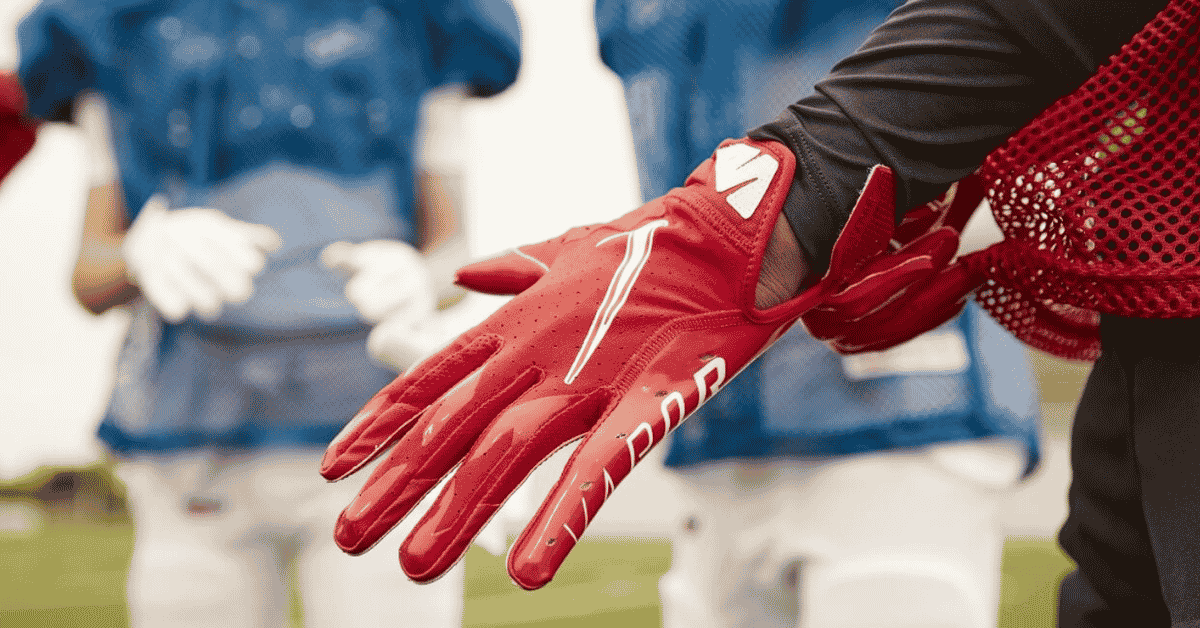
Receiver gloves typically use a tacky material across the palm and fingers. When you catch the ball, that surface creates friction between your hand and the football.
Some gloves feel super sticky. Others go lighter on tackiness and lean more into flexibility and natural hand movement instead.
More grip isn’t automatically the better choice, by the way.
Like a locked-in, secure feel while catching? Go for a highly tacky palm. Prefer feeling the ball more directly? A thinner glove with moderate grip might suit you better.
What matters most is consistency you want that grip working reliably in practice and games, not just because it felt unusually sticky the one time you tried it on in the store.
Receiver Gloves vs Lineman Gloves
Your position should really drive what you buy here.
Wide receivers need to actually catch the ball, so lightweight builds, flexible fingers, and reliable grip usually top the priority list.
Defensive backs want similar things too, since quick hand movement and ball control matter for them as well.
Lineman gloves have a rougher job overall. Players at the line deal with constant contact, so protection becomes way more important than grip alone. These gloves often pack extra padding around the areas taking the most hits.
They’ll feel bulkier than receiver gloves, sure, but that’s not really a downside here. If your hands are constantly involved in blocking, a bit of extra padding usually beats an ultra-thin palm.
Do You Actually Need Padded Gloves?
Depends entirely on what your hands go through during a game.
For receivers, too much padding can actually get in the way. A thinner glove usually gives a better feel for the ball and lets your fingers move more freely.
For linemen, it’s the opposite extra padding genuinely helps when your hands are taking repeated contact play after play.
There’s a middle ground too, honestly. Some gloves offer modest protection without feeling bulky at all.
Think about your position and playing style rather than assuming more padding always equals a better glove that’s not really how it works.
Breathability Gets Overlooked A Lot
Nobody wants sweaty hands stuck inside gloves halfway through practice.
Football involves long stretches of activity, especially during training, and gloves that trap too much heat get uncomfortable fast.
Mesh panels and breathable materials let air move through, and they help moisture escape instead of leaving your hands feeling damp and gross.
The wrist area matters too. A secure closure keeps the glove in place, but shouldn’t feel overly tight either. Adjustable straps help here since you can dial in the tension to fit your hand exactly.
Picking Gloves For Hot Or Wet Weather
Weather changes how a glove actually performs.
Hot summer practice? Lightweight, breathable gloves usually feel a lot better than heavily padded ones. Cold day? You might want more coverage, though thicker gloves can dull that natural ball feel a bit.
Rain’s its own challenge entirely.
Some football gloves are built to maintain grip even when things get damp, but no glove makes a wet football behave exactly like a dry one that’s just physics. Playing in wet conditions regularly? Get a pair actually designed for that instead of relying on your standard receiver gloves.
Taking Care Of Your Football Gloves
Even a great pair loses performance fast if you don’t look after it properly.
One simple habit let them actually dry out after practice. Don’t just ball them up and toss them in a damp sports bag overnight, that’ll ruin them quicker than you’d think.
Cleaning matters too, especially around the palm. Dirt and debris build up on the grip surface over time and mess with how it feels against the ball.
Always stick to whatever cleaning instructions come with the gloves. Different materials need different care, and washing too aggressively can wreck the palm or fabric.
Also keep an eye on the grip itself. Once the palm looks visibly worn or starts losing its texture, it’s probably time to replace them rather than trying to squeeze one more season out.
Finding The Right Football Gloves
No single pair works perfectly for every player out there.
Receivers usually care most about grip, flexibility, and a close fit. Linemen might prioritize durability and protection over an ultra-tacky palm. Younger players need extra attention on sizing, since an oversized glove can be genuinely hard to control.
Start simple measure your hand, get the right size, factor in your position, then think about grip, padding, breathability, and weather performance.
The best football gloves are the ones that just feel natural once you’ve got them on. If you stop noticing them mid-game, that’s usually a good sign you picked right.
Quick FAQ
How Should Football Gloves Fit?
Snug, without restricting your fingers or leaving loose material bunching around your hand.
Do Football Gloves Actually Help With Catching?
Yeah tacky palm materials genuinely improve grip and help players keep control of the ball.