Portable Heater Basics: Heat, Energy Use And Safety
There’s a big difference between wanting a warmer whole house and just wanting one room to feel less cold. Working at a desk, watching TV in the evening, trying to warm up a chilly bedroom cranking up the central heating for that feels like overkill. That’s exactly where a portable heater comes in handy.
These small appliances are easy to move around, give you extra warmth right where you actually need it. But buying one isn’t just about grabbing whatever gets hottest fastest. Room size, electricity use, type of heat, basic safety all of it deserves some thought.
How Does a Portable Heater Actually Work?
A portable heater’s built to warm a specific area rather than heat your whole home. Most run on electricity, come in different sizes and designs.
Some push warm air around the room with a fan. Others send heat directly toward people or objects nearby instead. Oil-filled models work slower but give steady warmth over longer stretches.
That difference shows up in everyday use. A heater that works great beside your desk might not cut it in a large living room at all.
Common Portable Heater Types
Ceramic Heaters
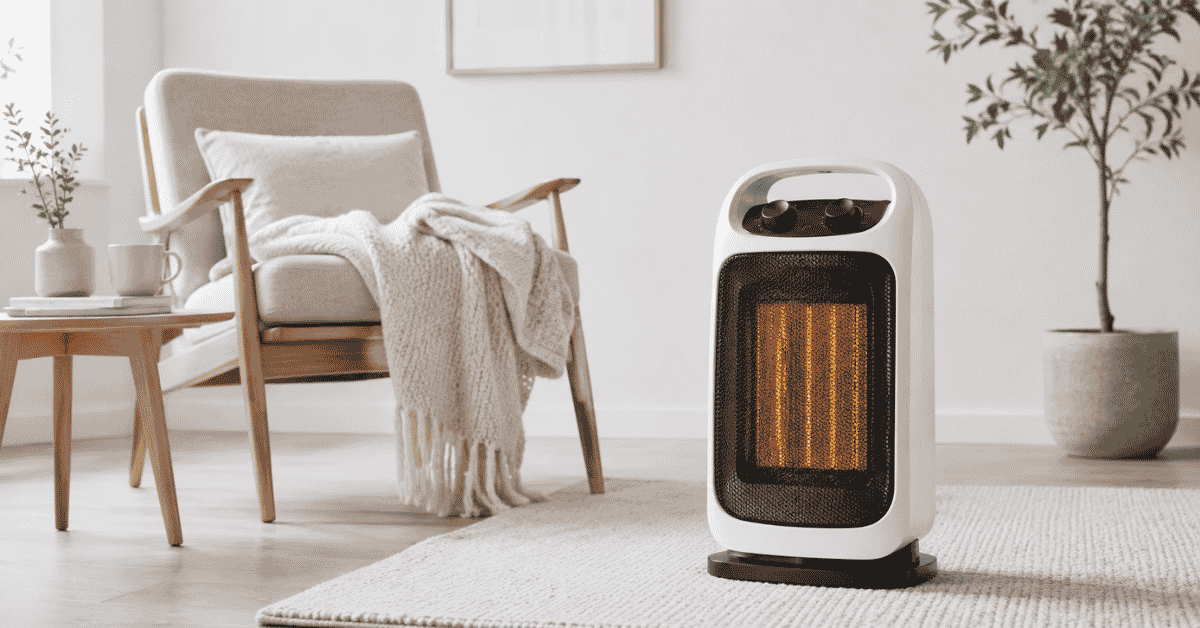
Ceramic heaters are popular since they’re usually compact and heat air pretty quickly. A fan moves air over the heating element, spreads it around the room.
Useful in home offices, bedrooms, smaller living spaces. Trade-off’s the fan noise, though might bother you if you’re after a completely quiet room.
Radiant Heaters
Radiant heaters take a different approach entirely. Instead of relying mostly on heated air, they send infrared heat straight toward nearby people and objects.
Genuinely useful if you spend most of your time in one spot. Sitting close to the heater makes you feel warmer without needing to heat the entire room around you.
Oil-Filled Heaters
Oil-filled heaters warm up slower, but they’ve got a different advantage going for them. Once heated, the oil inside holds heat and releases it gradually over time.
Tend to be heavier than smaller fan heaters, so they suit situations where the heater’s staying put in one room rather than moving around constantly.
Choosing the Right Heater for Your Room
Room size should be one of the first things you think about here.
A compact heater might be perfectly fine for a small bedroom or office, but struggle badly in a large, poorly insulated room. On the flip side, buying a way bigger heater than you actually need doesn’t automatically mean better results either.
Check the manufacturer’s recommended room size or heating capacity. Also think about things like drafty windows, insulation, ceiling height all of it plays a role.
A room that loses heat fast obviously needs more work from the heater than a well-insulated one does.
How Much Electricity Does a Portable Heater Use?
This is where running costs tend to surprise people, honestly.
Electric heaters get rated in watts. Higher wattage generally means more electricity used at full power. A 1,500-watt heater, for instance, uses more electricity over the same period than a 750-watt model would.
Actual cost depends on your electricity rate and how long the heater’s actually running.
Which is why a thermostat’s genuinely useful. Instead of running flat-out constantly, the heater can cycle on and off to hold your set temperature.
A timer helps too. Only need warmth for a couple hours while working or relaxing? No real reason to keep it running the rest of the evening unnecessarily.
Features That Are Actually Worth Having
Some heater features sound impressive but aren’t exactly essential. A few, though, genuinely make everyday use easier.
An adjustable thermostat’s one of the more useful controls, lets you dial in your preferred temperature. Multiple heat settings help too when you don’t need maximum output blasting constantly.
Tip-over protection matters a lot here. Heater gets knocked over, this feature shuts it off automatically genuinely important for safety.
Overheat protection adds another layer, switching the heater off if it gets excessively hot.
Timer and remote control are more about convenience, sure, but they’re handy depending on where you keep the heater around the house.
Portable Heater Safety
A portable heater should never get treated like just another piece of furniture sitting around.
Keep it on a stable, level surface, give it plenty of open space around it. Curtains, blankets, clothes, paper, furniture, anything flammable keep all of it well away from the heating unit.
Don’t cover a heater while it’s running. Blocking airflow creates problems, can cause the unit to overheat pretty fast.
Pay attention to the electrical connection too. Damaged cords and plugs shouldn’t get used at all. Avoid overloading an outlet with several high-power appliances plugged in at once.
And maybe the simplest rule, also one of the most important turn the heater off when you leave the room or go to sleep, unless the manufacturer’s instructions specifically say otherwise and the appliance is built for that kind of use.
Where Should You Actually Put a Portable Heater?
Placement affects more than just warmth, turns out.
Putting a heater in an open part of the room gives warm air more room to actually circulate. Pushing it behind a sofa, or placing objects right in front of it, restricts airflow badly.
Keep the unit away from busy walkways too. A heater sitting somewhere people can easily trip over isn’t exactly a good setup.
Bedrooms need extra caution, since bedding and clothing can come into contact with the heater surprisingly easily without you noticing.
The manufacturer’s clearance recommendations should always take priority over general advice you find online.
Simple Ways to Use Less Energy
You don’t necessarily need to run a portable heater harder to actually feel warmer.
Close doors and windows when it makes sense, deal with obvious drafts, use curtains to cut down heat escaping through windows. Only spending time in one room? Heating just that room makes way more sense than trying to warm unused areas too.
Using a lower heat setting once the room’s comfortable can cut unnecessary energy use as well.
A timer’s useful if your routine’s pretty predictable. No real reason for the heater to keep running long after you’ve left your desk, for example.
Picking the Right Portable Heater
The best portable heater really depends on how and where you plan to use it.
A ceramic model’s practical when you want quick warmth in a smaller space. A radiant heater makes sense if you mainly want direct heat while sitting in one spot. An oil-filled model fits better when you prefer steady warmth and don’t need something you’re moving around constantly.
Look past the price tag. Check heating capacity, controls, energy requirements, and safety features. Most importantly, think about the actual room where you’ll be using it day to day.
A good portable heater should make a cold space more comfortable without becoming a safety concern or turning into a surprisingly expensive appliance to run.
Quick FAQ
Can a portable heater warm a whole room?
Yes, if its heating capacity matches the room. Insulation, room size, drafts, and ceiling height all affect how well it heats the space.
Can I leave a portable heater on while sleeping?
Safer to switch it off before going to sleep. Always follow the manufacturer’s instructions, and never place the heater near bedding, curtains, or other flammable materials.