Kitchen Sink Ideas: Find The Right Style For Your Home
Honestly, a kitchen sink gets used way more than people give it credit for. You’ll spend hours picking out cabinets, countertops, fancy appliances and then the sink just sits there quietly doing all the actual work. Washing veggies, rinsing plates, filling up a pot, cleaning after dinner… it’s basically the busiest spot in the whole kitchen.
Which is exactly why picking a kitchen sink purely on looks tends to backfire. That sink that looked incredible in the showroom? Might be a total pain once it’s actually sitting in your kitchen.
There’s a lot out there to pick from, no doubt. But once you get how each type of kitchen sink actually works, things start making a lot more sense.
Think About Your Kitchen Before The Sink
Start with the space you’ve got, not the sink you want.
Got a bigger kitchen? You can probably fit a generous kitchen sink without losing too much countertop. Smaller kitchen, though every inch counts, and a deep sink eating into your prep space can get old fast.
Your cooking habits play a role too, more than people expect.
If you’re constantly pulling out big roasting trays or stockpots, go wide and deep. Mostly quick meals, smaller pans? A compact sink probably makes more sense and leaves you extra counter room.
There’s no one-size-fits-all here. The right kitchen sink is whatever actually fits your kitchen and your routine nothing more complicated than that.
Single Bowl Or Double Bowl?
Usually one of the first forks in the road when picking a kitchen sink.
Single-bowl sinks give you one open, uninterrupted space. Sounds small, but it makes a real difference big pans, baking sheets, casserole dishes all slide in without you having to angle them around some annoying divider.
Double-bowl sinks split things into two sections. Some people swear by having one side for washing, the other for rinsing. Also works well if you like letting dishes soak on one side while still using the other.
Wash oversized cookware a lot? Go single bowl. More of a classic wash-then-rinse person? Double bowl’ll probably feel more natural.
Stainless Steel Remains A Practical Choice
There’s a reason you see stainless steel kitchen sink options basically everywhere they just work, no drama.
Tough, fairly affordable, and they fit into almost any kitchen style without forcing you to redesign the room around them. Modern cabinets, traditional interior, doesn’t matter stainless steel just fits in.
The finish does change things a bit, though. Brushed finishes hide small scratches and marks better. Polished ones look amazing when spotless, but fingerprints and water spots show up way more easily.
Want something low-effort that just works? Stainless steel’s still one of the safest picks around.
Granite Composite For A Different Look
Not everyone wants shiny metal, and that’s fair.
Granite composite has a heavier, more stone-like feel, and comes in shades that blend nicely into the rest of the kitchen — black and grey tones especially are having a moment in modern kitchens right now.
It’s made from stone particles bound with resin, which is where that solid, substantial feel comes from.
One thing to keep in mind weight. These sinks are genuinely heavy, so make sure the cabinet underneath can actually handle the installation.
They also need a bit more upkeep around water marks, particularly if your local water leaves mineral deposits behind.
Farmhouse Sinks Make A Statement
Hard to miss a farmhouse kitchen sink, honestly that’s kind of the point.
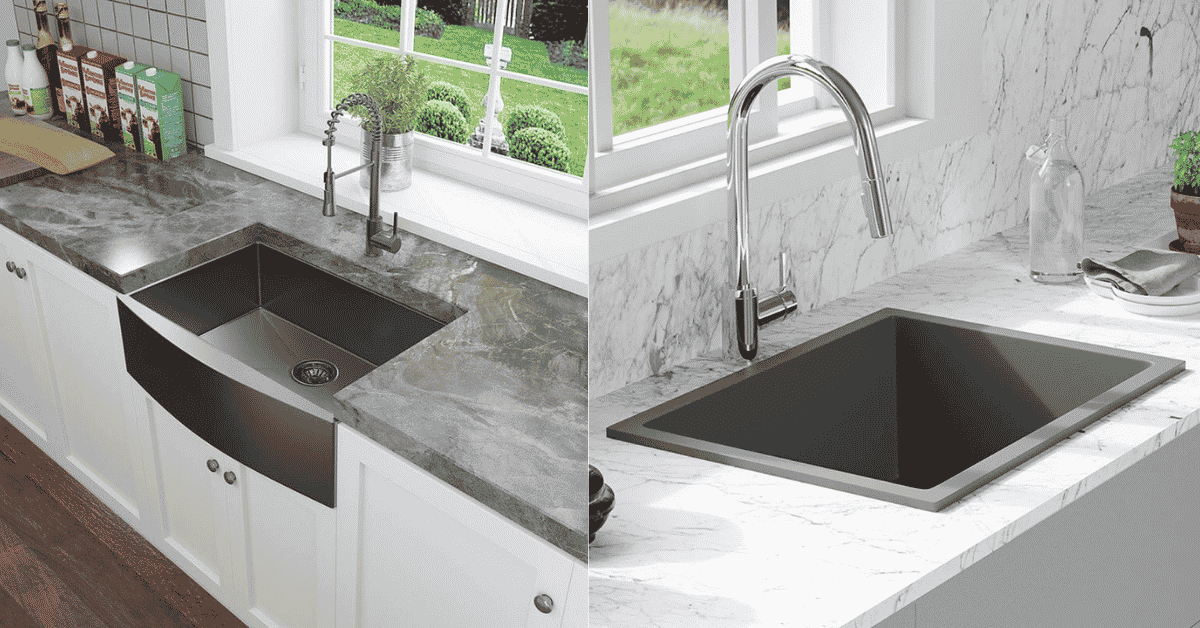
Instead of hiding behind the countertop’s front edge, the sink’s front is fully exposed. That apron-front design gives kitchens a more traditional, characterful vibe.
The deep basin’s genuinely useful too. Washing big pots or piles of dishes regularly? That extra depth helps a lot.
Just know it’s not always a simple swap. Farmhouse sinks often need specific cabinet dimensions and extra prep work. Doing a full kitchen renovation anyway? Easy to plan for. Just swapping an existing sink without touching anything else? Gets trickier.
The Clean Look Of An Undermount Sink
An undermount kitchen sink sits below the countertop instead of on top of it.
End result’s a neat, seamless edge between counter and basin. Spill flour or crumbs while cooking? Just sweep it straight in no fighting around a raised rim.
That’s part of why undermount sinks pair so well with quartz, granite, and other solid countertop materials.
Installation’s gotta be done properly though. Both the countertop and cabinet need to support this style, so lock in your choice before ordering the countertop, not after.
Drop-In Sinks Keep Things Simple
Want something easier? A drop-in kitchen sink might be the better fit.
Also called a top-mount sink it sits in a cutout, rim resting on top of the counter. Familiar design, works with a wide range of worktop types.
Also makes sense if you’re just replacing an old sink, since you usually don’t need to touch the surrounding countertop much.
Downside’s the raised rim, though. Some people just prefer that flush, seamless look an undermount gives, especially in newer kitchens.
Don’t Forget The Sink Size
Easy trap measuring the visible space and assuming that’s the whole story.
The cabinet underneath matters just as much, if not more.
A kitchen sink can have the right width and still be wrong for your setup if the bowl’s too deep or the plumbing leaves too little room. Always check the manufacturer’s actual installation dimensions instead of eyeballing it off the sink’s overall size.
Also think hard about how much countertop you’re giving up.
A massive basin sounds great in theory until you realize there’s barely room to chop vegetables anymore. Sometimes going slightly smaller actually makes the whole kitchen work better.
Cleaning And Everyday Maintenance
Nobody gets excited talking about this, but it matters more than people admit.
Your kitchen sink probably gets cleaned more than anything else in your kitchen. Smooth surfaces wipe down easily; awkward corners and fussy edges just trap food and grime.
Water quality plays into it too hard water leaves mineral marks on stainless steel and darker finishes alike.
You don’t need a sink that stays spotless with zero effort. Just one that doesn’t turn cleaning into a whole event.
Finding The Right Kitchen Sink
Really just comes down to a few honest questions.
How much space have you got? What do you usually wash? Should it blend in or stand out as part of the design? And how much maintenance are you actually up for?
For something simple, stainless steel’s still hard to beat. Granite composite if you want something more substantial and modern. Farmhouse for traditional kitchens. Undermount if you want that clean countertop transition.
Base your kitchen sink choice on how you actually use your kitchen, and that overwhelming list of options gets a lot smaller, pretty fast.
Quick FAQ
What’s The Best Material For A Kitchen Sink?
Stainless steel durable, versatile, low-maintenance. Hard to go wrong with it.
Is A Single Bowl Better Than A Double Bowl?
Single bowls suit large cookware best; double bowls work better if you like separate washing and rinsing zones.