Honey Pot Guide: Storage, Design And Everyday Use
A jar of honey sitting on the kitchen counter seems simple enough, but serving it neatly is honestly kind of annoying. Spoon gets sticky, honey drips down the side of the jar, and before you know it the whole area needs cleaning up again.
A good honey pot solves a lot of that hassle. Gives honey a dedicated spot to live, makes serving it way easier at breakfast, tea time, or whenever you just want a bit of sweetness. Design matters too some pots are built for quick everyday use, others get picked purely because they look good sitting on the table.
What Is a Honey Pot, Exactly?
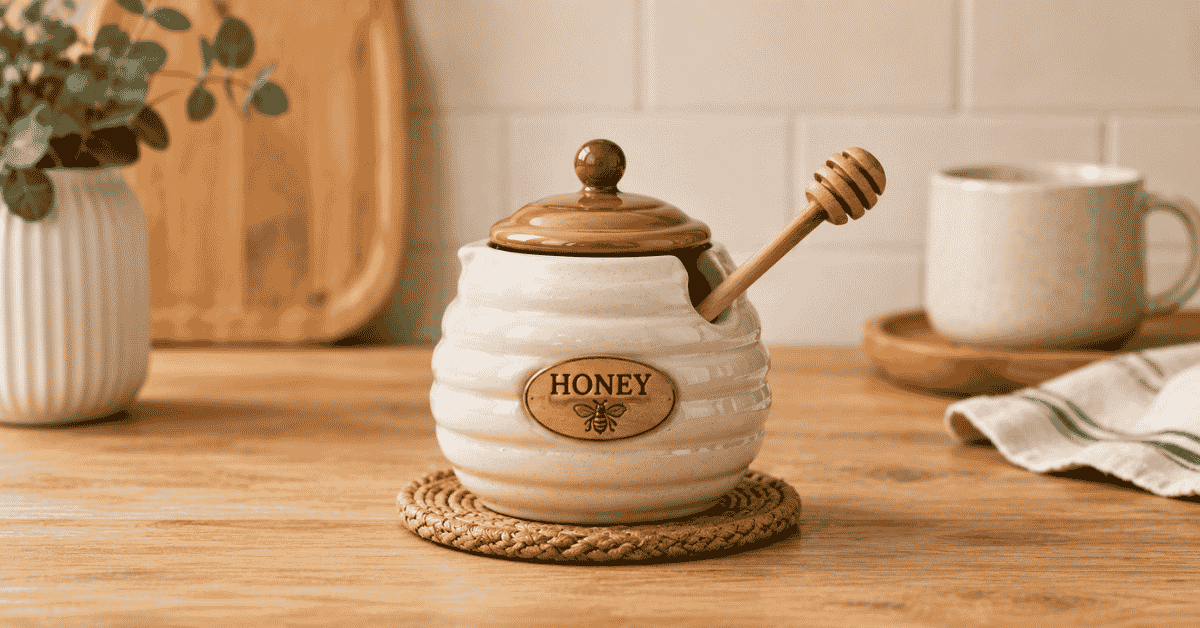
A honey pot’s a small container built specifically for storing and serving honey. A lot come with a lid, spoon, dipper, or some kind of dispensing mechanism built in.
Unlike a regular food jar, a honey pot’s usually designed with serving in mind. You can keep it near your tea, toast, pancakes, whatever, without dragging out some huge jar every single time.
Honey pots come in a bunch of shapes and materials. Glass and ceramic are especially common, though you’ll also find wooden, stainless steel, and other designs floating around too.
Best choice really depends on how you actually plan to use it.
Honey Storage: Keeping It Fresh and Easy to Use
Honey’s naturally long-lasting, sure, but that doesn’t mean storage conditions don’t matter at all.
A honey pot should have a reasonably secure lid to keep dust, crumbs, and moisture away from the honey itself. Keeping the container somewhere dry, away from excessive heat, is just a sensible move.
You also don’t need to refrigerate regular honey. Actually, cold temps can make honey thicker, harder to pour or scoop out.
Over time, honey can naturally crystallize too. Doesn’t necessarily mean it’s gone bad crystallization’s a normal process, happens at different speeds depending on the honey type.
Crystallized honey getting hard to use? Gentle warming helps bring it back to a smoother consistency. Just avoid excessive heat, especially if you want to keep the honey’s natural qualities intact.
Honey Pot Materials
The material of a honey pot affects its look, weight, durability, and how much work cleaning it takes.
Glass Honey Pots
Glass is practical if you like actually seeing how much honey’s left. Doesn’t absorb flavors easily either, and it looks pretty attractive sitting on an open kitchen shelf.
Main drawback’s obvious glass breaks if you drop it.
For a home where the pot’s staying in one spot most of the time, that’s probably not a huge issue though.
Ceramic Honey Pots
Ceramic honey pots are popular since they’ve got that traditional kitchen feel to them. Come in tons of colors, shapes, decorative patterns too.
A ceramic pot looks especially nice on a breakfast table, or sitting alongside other serving dishes.
Trade-off’s weight, though. Heavier than glass or lightweight plastic, and it can chip if you’re not careful handling it.
Wooden Honey Pots
Wooden designs give a honey pot that warm, rustic look. Particularly appealing if your kitchen’s got a natural or farmhouse-inspired vibe going on.
Wood needs more care than glass or ceramic, though. Follow the manufacturer’s cleaning instructions rather than just tossing it in the dishwasher without thinking.
Honey Pot Designs and Features
Not every honey pot works exactly the same way, turns out.
Some have a simple open top with a small spoon. Others come with traditional honey dippers those collect honey between the grooves, let you drizzle it over food easily.
There are dispensing designs too, ones that let you control exactly how much honey comes out without repeatedly dipping a utensil in.
Right design really depends on your routine.
Using honey several times a day? A convenient dispenser saves real time. Mostly serving it at breakfast or when guests come over? A classic pot with a lid’s probably all you need.
Choosing the Right Honey Pot Size
Size is easy to overlook, honestly, but it matters.
A small honey pot’s convenient for everyday table use since it barely takes up counter space. Makes sense too if you only use a little honey at a time.
A bigger container might be more practical for a household that goes through honey fast.
No real advantage picking the biggest honey pot out there if you barely use honey anyway. Smaller container’s easier to handle, looks less cluttered on the table too.
Think about how much honey you actually use rather than just picking based on looks alone.
Using a Honey Pot Every Day
A honey pot’s not just for tea, by the way.
Works for toast, oatmeal, pancakes, waffles, yogurt, fruit, homemade desserts all of it. Makes serving honey to guests way easier too.
One small habit makes a real difference use clean, dry utensils.
Introducing water or food particles into the honey creates unnecessary mess, can affect how well it stores too. A dedicated honey dipper or spoon helps since it just stays with the container instead of getting borrowed from elsewhere in the kitchen.
Households with kids? A stable pot with a secure lid’s probably more practical than some tall jar that tips over easily.
Cleaning and Maintaining a Honey Pot
Honey’s sticky, so cleaning’s just part of owning one, unfortunately.
Honey dried around the rim? Warm water helps soften it up before cleaning. Avoid scraping aggressively at delicate surfaces, especially glazed ceramic or decorative finishes.
Glass is generally straightforward to clean. Wooden designs might need more careful handling, though.
The lid and serving utensil deserve attention too. Easy to clean the pot itself and completely forget about the spoon or dipper sitting right there.
Keeping everything clean makes the next use way less messy overall.
Finding a Honey Pot That Fits Your Kitchen
The best honey pot doesn’t need to be expensive or elaborate at all.
Start with how you actually use honey day to day. Want something simple? A small glass or ceramic container with a lid’s probably enough. Presentation matters to you? Look for a design that fits your kitchen or dining table style.
Pay attention to the opening, lid, serving method, size, and how easy it is to clean. A gorgeous honey pot that’s awkward to actually use will probably just end up sitting in a cupboard, unused.
A practical design that’s easy to refill, clean, and reach for every morning’s gonna get way more actual use.
Quick FAQ
Can honey be stored in a honey pot?
Yes a clean, dry honey pot with a suitable lid works fine for everyday honey storage. Keep it somewhere dry, away from excessive heat.
What’s the easiest honey pot to clean?
Glass honey pots are generally among the easiest. Ceramic’s simple to maintain too, as long as the care instructions allow normal washing.