
Steering Wheel Materials, Sizes And Styles Explained
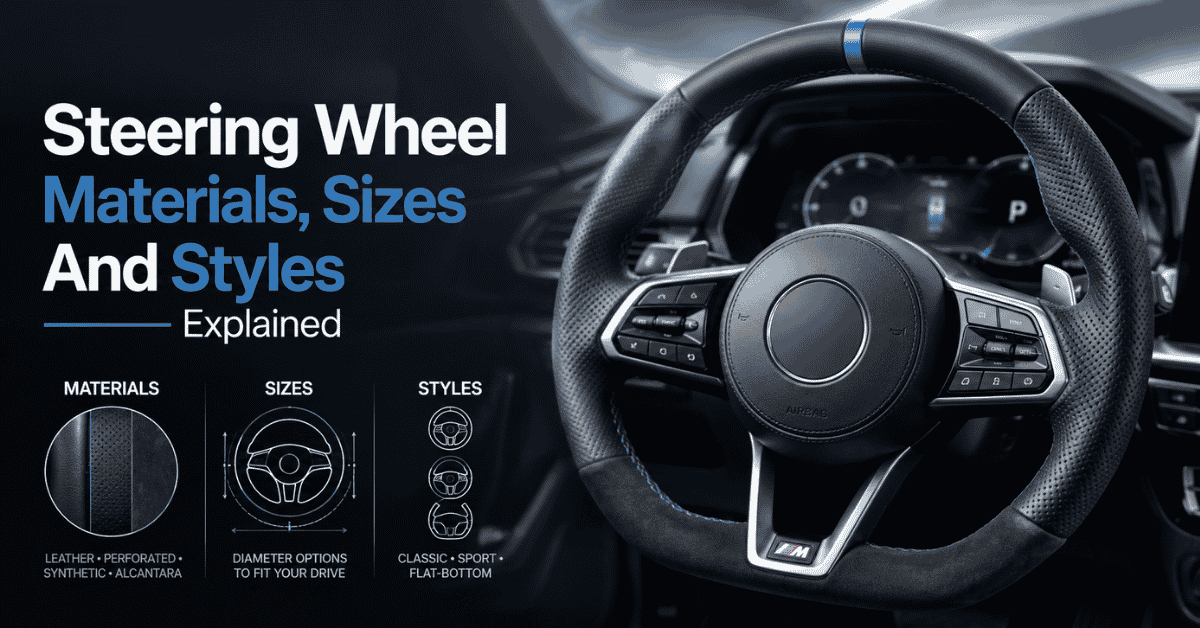
A steering wheel’s one of those car parts you barely think about until it starts feeling wrong in your hands. The right size, shape, and material can genuinely change how a car feels, especially on longer drives where you’re gripping it for hours.
There’s no single steering wheel that’s perfect for every driver. Some people love soft leather, others prefer synthetic materials or something more textured for grip. Size matters too, especially comparing an original factory wheel against an aftermarket one.
Steering Wheel Materials
What covers a steering wheel affects way more than just looks. It changes how it feels, how well you can grip it, and how it holds up over time.
Leather Steering Wheels
Leather’s still popular for a reason comfortable without feeling too slippery. A good leather wheel actually develops a nicer feel the more it’s used, honestly.
Downside’s the upkeep, though. Sweat, hand oils, sunlight, general wear all of it affects the surface eventually. In a car driven daily, the spots you grip most often tend to show wear first.
Synthetic Leather and Vinyl
Synthetic materials are usually easier to maintain, and cost less than the real deal too. Modern synthetic leather can look surprisingly close to genuine leather these days.
Want something you can just wipe clean? This works well. Especially handy if the car sees heavy use or sits in hot weather a lot.
Rubber and Textured Materials
Rubber and textured surfaces get picked when grip’s the main priority. They feel secure in your hands, without worrying much about that premium look.
You’ll see these on sportier or utility-focused wheels most often. Not quite the luxury feel of leather, sure, but genuinely practical.
Steering Wheel Sizes
Size is honestly one of the most important things to understand before swapping a wheel out.
A bigger wheel generally needs more movement to turn the car through a given steering angle. A smaller one makes inputs feel quicker, more responsive.
Doesn’t automatically mean smaller’s better, though.
The factory wheel was picked specifically to work with the car’s steering system, seating position, visibility, and other controls. Change the size, and you change the whole driving feel sometimes in ways you didn’t expect.
For a replacement, compatibility matters way more than just picking whatever size you personally like.
Steering Wheel Shapes
Most factory wheels are round, but plenty of other shapes exist too.
Round Steering Wheels
The classic round design stays popular because it’s predictable and versatile. Works great for everyday driving, makes it easy to gauge wheel position while maneuvering around.
For most road cars, a standard round wheel’s the straightforward, sensible pick.
Flat-Bottom Steering Wheels
A flat-bottom wheel’s got a flattened section at the bottom instead of a full circle.
Often tied to sportier vehicles, and it can give a bit more legroom getting in and out. The visual difference stands out too, which is part of why these have gotten popular in modified interiors.
Whether it actually helps depends a lot on the vehicle and how much legroom you’re working with already.
Sport Steering Wheels
Sport-oriented wheels might have thicker rims, more pronounced grips, or a shape built around spirited driving.
A thicker rim feels substantial in the hands, though some drivers find it less comfortable if they’re used to something slimmer.
Grip and Comfort
Grip’s something you notice fast once you’ve spent an hour or two behind the wheel.
A comfortable steering wheel makes long drives way less tiring overall. Texture matters here too smooth surfaces feel refined, while perforated or textured sections add extra grip when you need it.
Rim thickness comes down to personal preference, mostly.
Some drivers like a thick wheel since it fills the hand more comfortably. Others prefer thinner rims because they feel lighter, more natural to hold.
No right answer here, really. Comes down to your hand size and how you actually drive.
Choosing the Right Steering Wheel for Your Car
Before buying a replacement, compatibility should be right at the top of your list.
Think about the vehicle’s make, model, year, steering column connection, and whatever equipment’s already built into the original wheel.
Modern steering wheels often house important controls and safety equipment. Depending on the car, the wheel might connect to things like the horn, airbag, cruise control, audio controls, or driver-assistance features.
Swap the wheel without accounting for all that, and you can create some genuinely serious problems.
Which is why an aftermarket wheel shouldn’t get picked based on looks alone.
Factory vs Aftermarket Steering Wheels
The original wheel’s designed specifically for your vehicle, so it usually gives the easiest fit and keeps all the factory controls working properly.
An aftermarket wheel opens up more choices material, shape, thickness, appearance, all of it. Appealing if you’re building a custom interior or chasing a different driving feel.
But customization comes with trade-offs.
A different wheel might need extra components or adapters, and some factory functions might not work quite the same afterward. Safety systems especially matter here, so any replacement needs to stay compatible with the car’s original safety equipment.
What Actually Makes a Steering Wheel Comfortable?
Comfort really comes down to a bunch of small details working together.
The wheel should feel natural in your hands, offer enough grip, and let you keep a relaxed driving position. Thickness should suit your hands specifically, and the material needs to stay comfortable whether it’s a short trip or a long one.
Temperature plays a role too. Some materials get noticeably hot sitting in direct sunlight, while others feel cold during winter.
Easy to focus purely on looks when picking a wheel, sure, but comfort’s something you’ll notice literally every time you drive.
Finding the Right Steering Wheel
The best steering wheel isn’t necessarily the smallest, thickest, or priciest option out there. It’s whichever one actually suits your car and feels natural to use.
Start with the material, then think about size, shape, grip, and overall compatibility. Replacing the factory wheel? Pay close attention to the safety equipment and electronic controls tied into it.
A good steering wheel should improve your driving experience without creating problems elsewhere. For everyday driving, comfort and compatibility usually matter a lot more than having the flashiest-looking design out there.
Quick FAQ
What’s the best material for a steering wheel?
Leather’s popular for comfort and feel, while synthetic materials are easier to maintain. Best choice really depends on your budget and how you use the car.
Does steering wheel size affect driving?
Yes a different size changes steering feel and how much movement’s needed for inputs. Replacement wheels should always stay compatible with the vehicle.