Kidney Pain: Causes, Symptoms And When To Seek Help
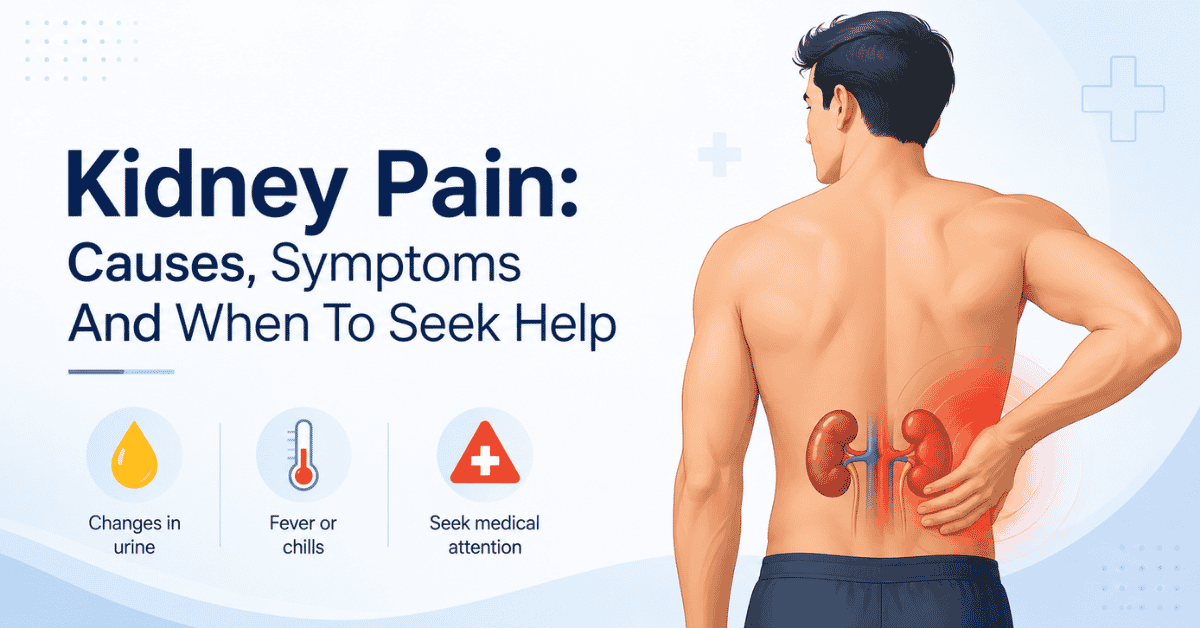
Back or side pain’s unsettling on its own. Add “is this my kidneys?” to the mix, and it gets a lot worse. Here’s the thing though kidney pain often feels a lot like plain old back pain. Location by itself? Doesn’t tell you much.
Kidney-related discomfort usually sits higher up, around the sides of your back, just under the ribs. Depending on what’s going on, you might also notice changes when you pee, feel sick, run a fever, or spot blood in your urine.
Honestly, the stuff happening alongside the pain usually says a lot more than the pain itself.
Where Does Kidney Pain Actually Show Up?
Your kidneys sit toward the back of your abdomen, just below the lower ribs one on each side of the spine.
Pain from a kidney’s typically felt in the flank. That’s the area between upper abdomen and back. Could hit one side only. Both kidneys acting up, though? Pain on both sides is possible too.
Sometimes it travels toward the front, or down toward the groin. Common with kidney stones especially.
Location’s a clue. Not proof. Plenty of muscles, organs, and other stuff crowd that same general space.
Kidney Stones: Small Thing, Big Pain
Probably the most well-known culprit here.
A stone forms when certain substances in urine get concentrated, crystallize over time. Some are tiny pass without much fuss. Others get stuck in the urinary tract, and that’s when it gets bad, fast.
Sharp. Sometimes severe. Comes in waves a lot of the time, rather than staying steady the whole way through.
Nausea, vomiting, needing to pee constantly, discomfort while urinating, blood in the urine any of that can tag along too.
Severe symptoms from a stone? Might need actual medical treatment, especially if it’s not passing on its own.
Kidney Infections and Pain
Another big cause worth knowing about.
Usually starts somewhere else in the urinary tract first, then works its way up. Unlike a simple muscle ache, this one makes you feel unwell all over not just localized.
Fever, chills common warning signs. Some people also get painful or frequent urination, nausea, vomiting, or urine that looks cloudy or smells off.
Pain plus fever together? Pay attention. Left alone, a kidney infection can escalate fast. Not something to just wait out and hope for the best.
Kidney Pain or Just a Sore Back?
Honestly, this confuses a lot of people.
Strained your back lifting something? Sat weird all day? Slept badly? Probably muscular, not kidney-related.
Muscle pain tends to shift when you bend, twist, move, or press on the spot. Kidney pain feels deeper usually, sits higher, right under the ribs.
Not a perfect rule though enough overlap that pain location alone isn’t reliable.
What actually matters more? Everything else going on around it.
Fever, chills, blood in urine, painful urination, nausea, noticeable changes in how you’re urinating all of that pushes things toward “get it checked” territory.
Other Symptoms Worth Watching
Kidney problems don’t look the same for everyone. Makes this genuinely harder to pin down sometimes.
Dull ache that won’t quit? Sudden, severe pain instead? Nausea and vomiting for some. Mostly urine changes for others.
Blood in urine don’t ignore that. Same goes for a big shift in how often you’re going, or trouble passing urine at all.
And here’s the kicker you can have kidney disease with barely any pain. Early stages especially, sometimes almost no symptoms at all.
Which is exactly why routine checkups matter, even when you’re feeling fine.
When Should You Actually Get Checked?
Not every twinge near your kidneys means an ER trip. But persistent, unexplained, severe pain? Shouldn’t keep getting brushed off.
Get medical attention fast if severe pain shows up with fever, chills, vomiting, blood in urine, or trouble urinating.
Severe flank pain plus fever together particularly concerning combo, since infection’s often the culprit.
Also worth urgent care can’t urinate at all, symptoms worsening quickly, or pain bad enough that daily life genuinely becomes hard to manage.
Treatment hinges entirely on the actual cause. Getting the diagnosis right? Matters a lot here.
What Happens at the Doctor’s Office?
Usually kicks off with questions about the pain itself.
Where’d it start? Come and go? How bad? What makes it better or worse? Questions about urination, fever, nausea, past stones — all helps narrow things down.
A urine test checks for blood, bacteria, other red flags. Blood tests give a read on kidney function, whether infection’s likely.
Sometimes imaging’s needed ultrasound or CT scan can spot a stone, blockage, or other structural issue.
Treatment depends completely on what those tests show. Kidney infection, stone, strained muscle — three completely different problems. No single fix covers “kidney pain” as one catch-all thing.
Don’t Brush Off Pain That Keeps Coming Back
An ache in your back or side doesn’t automatically mean your kidneys are the problem. Plenty else could be behind it.
What actually matters is the bigger picture.
Pain that keeps returning, won’t settle, or comes bundled with changes in urination, fever, blood in urine, nausea, or anything else unusual worth getting looked at properly.
Trying to nail the cause down from location alone? Can genuinely mislead you. A proper medical evaluation is what actually figures out whether it’s kidneys, urinary tract, muscles, or something else entirely.
Quick FAQ
What does kidney pain usually feel like?
Often a deep ache or sharper pain in the side or back beneath the ribs depends on the cause.
Is kidney pain always serious?
No, causes vary. Severe pain, fever, blood in urine, vomiting, or trouble urinating needs prompt attention though.