
Pool Table Dimensions: Standard Sizes Explained
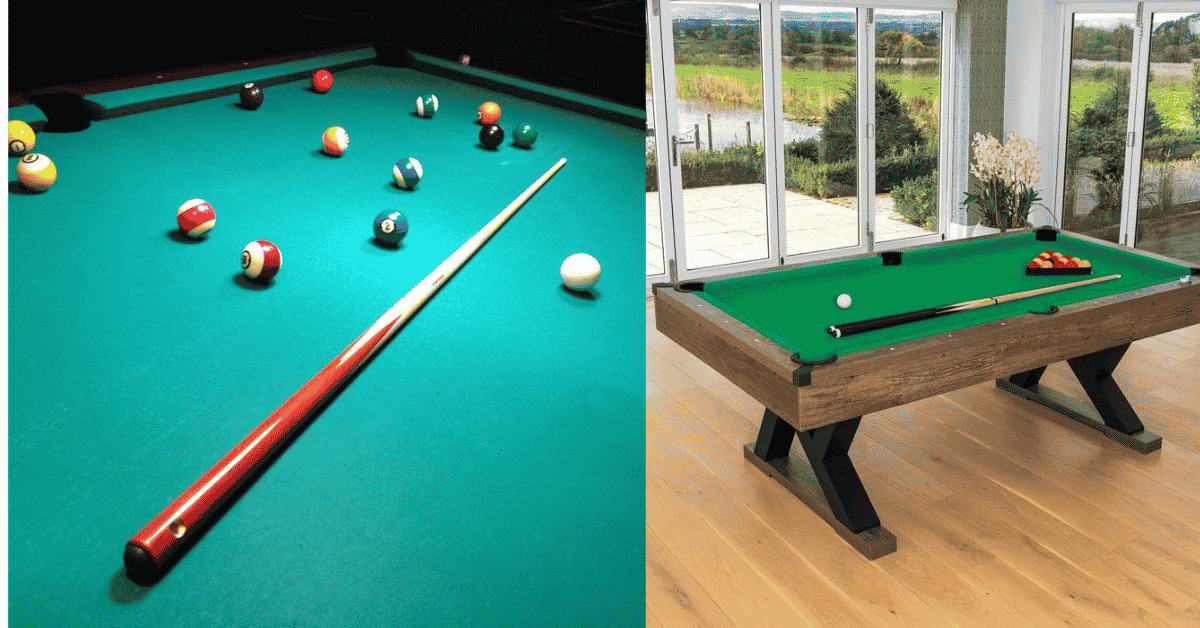
Buying a pool table is exciting right up until you actually start measuring the room, isn’t it? The table looks perfect online, sure, but once it arrives, you might discover there’s barely enough space to hold the cue properly. Honestly, that’s one of the most common mistakes people make.
The good news? Choosing the right size isn’t complicated. You just need to understand standard pool table dimensions, how much space a cue actually needs, and which table size makes sense for how you plan to use it.
What Pool Table Dimensions Actually Mean
Pool tables are usually sold as 7-foot, 8-foot, or 9-foot models. Those numbers sound simple enough, but they don’t always describe the table’s exact outside length that trips people up more than you’d think.
Manufacturers normally use the size as a general category, sort of a rough label more than an exact spec. The actual playing surface ends up smaller, since the rails, cushions, pockets, and cabinet all eat into that space. Two tables sold as “8-foot models” can genuinely have different exterior measurements annoying, but that’s the reality of it.
Most full-size pool tables follow a 2-to-1 ratio, though, at least the properly made ones. The playing surface is twice as long as it is wide. A surface measuring 44 inches across, for example, comes out to about 88 inches long.
That ratio stays consistent because it keeps the game balanced there’s real logic behind it, not just tradition. It also means you can roughly estimate a table’s proportions even before checking the detailed specs.
Standard Pool Table Sizes in the USA
In American homes, bars, clubs, and pool halls, three sizes show up most often: 7 feet, 8 feet, and 9 feet. Pretty much everything else is a variation on those three.
A typical 7-foot table has a playing surface close to 39 by 78 inches. A standard 8-foot table usually measures around 44 by 88 inches. A 9-foot tournament table generally works out to a 50-by-100-inch playing area.
There’s also an oversized 8-foot table, often called a “pro 8” a nice in-between option, really. Its playing surface tends to sit around 46 by 92 inches.
The difference between these sizes might not look huge on paper, honestly. It becomes obvious fast once you’re actually playing, though. A smaller table feels quicker, more crowded. A larger one gives you longer shots and demands real cue-ball control.
7-Foot Pool Table Dimensions
A 7-foot pool table is often called a bar box you’ve probably seen this exact size in neighborhood bars, arcades, casual game rooms, that sort of place. Familiar territory, basically.
It’s a good fit for homes where space is tight, no doubt about that. Basements, garages, spare rooms, and smaller recreation areas can usually take a 7-foot model far more easily than a larger table would allow.
The playing surface is typically about 39 inches wide and 78 inches long, give or take. Once you factor in the rails and cabinet, the full table ends up several inches larger on every side.
For comfortable play with a standard 58-inch cue, you’re looking at a room roughly 13 feet 6 inches by 16 feet 8 inches not enormous, but not tiny either.
Games on a 7-foot table tend to move quicker, plain and simple. Since the balls sit closer together, players deal with more clusters and shorter shots. That can make it genuinely fun for beginners and families, though experienced players might find it a bit cramped.
8-Foot Pool Table Dimensions
For a lot of American homes, an 8-foot table ends up being the most practical choice, honestly the sweet spot for most people.
It feels large enough for serious play without demanding as much room as a professional table would a nice middle ground. The standard playing surface comes in around 44 by 88 inches, while the full outside measurements depend on the cabinet and rail style.
A room measuring around 13 feet 11 inches by 17 feet 4 inches should give you enough space for standard cues worth double-checking before you commit, though.
An 8-foot table works well across a wide range of players, which is exactly its appeal. Beginners get enough room to actually learn shot control, while more experienced players can still practice longer shots and positioning.
It’s also just a sensible size for a family game room, honestly hits the mark for most households. The table doesn’t feel too small, but it usually fits far more comfortably than a 9-foot model ever would.
What Is an Oversized 8-Foot Table?
An oversized 8-foot table sits somewhere between a regular 8-foot table and a full 9-foot model the best of both worlds, arguably.
Its playing surface usually lands close to 46 by 92 inches. You’ll also see it described as a “pro 8” or “8.5-foot” table, depending on who’s selling it.
This size is worth a look if you want a more challenging game but don’t quite have the room for a full 9-foot table. It gives you longer shots without swallowing up the entire room a decent compromise, really.
9-Foot Pool Table Dimensions
A 9-foot table is the size most closely tied to professional tournaments and serious pool halls the real deal, essentially.
Its playing surface normally measures 50 inches wide by 100 inches long. That extra space makes a genuinely big difference bigger than most people expect going in. Long shots get harder, position play matters more, and small mistakes become much tougher to recover from.
To use a 9-foot table comfortably with standard cues, you’ll want a room around 14 feet 6 inches by 18 feet 4 inches. That’s a real commitment, space-wise.
This size makes sense for experienced players, or anyone building a proper dedicated game room. It’s not always the right call for a regular basement or a multipurpose space, though worth being honest about that.
A smaller table with proper clearance is usually far more enjoyable than a professional table squeezed into a room that’s just too tight for it. Cramped just isn’t fun, no matter how nice the table looks.
How Much Space Do You Actually Need Around a Pool Table?
The table itself is only part of the equation people forget this constantly. You need room for the cue too.
A standard cue runs 58 inches long, so players need close to five feet of clear space around the playing surface more than people usually budget for. Without that room, shots near the rails get awkward fast, and nobody enjoys that.
Look beyond just the walls when you’re measuring, too this part gets overlooked a lot. Support columns, cabinets, fireplaces, doorways, furniture, and shelves can all get in the way of a player’s stance or cue swing.
Shorter cues usually 48 or 52 inches can help with the occasional tight spot, no question. They shouldn’t become an excuse, though, for forcing a large table into a room that’s obviously too small for it.
Choosing the Right Pool Table Size
Start with the room, not the table. Always that’s the one rule worth remembering here.
Measure the usable space carefully, then think about seating, cue storage, lighting, and walking areas all the stuff that’s easy to forget until it’s too late. A room that technically fits the table on paper can still feel cramped once chairs and other furniture get added in.
A 7-foot table is ideal for casual play and smaller spaces. An 8-foot table suits most home game rooms. A 9-foot model works better for serious players who’ve got a genuinely large dedicated room to work with three fairly clear buckets, really.
The biggest table isn’t always the best table, either worth repeating that one. The right choice is whichever one lets people move naturally, take full shots, and actually enjoy the game without constantly worrying about the walls.
Final Thoughts
Pool table dimensions affect a lot more than just floor space, more than most people realize going in. They shape the speed of the game, the difficulty of the shots, and how comfortable the table actually feels to play on, session after session.
Before buying, check the playing surface, the full exterior measurements, and the recommended room size don’t skip any of the three. A few careful measurements now can save you from a genuinely expensive mistake later, and help you build a setup that feels right from the very first game.
Frequently Asked Questions
What pool table size is best for most homes?
An 8-foot table, usually hard to go wrong with it. It offers the best balance of space, comfort, and playing difficulty for most people.
Can a pool table fit in a 12-by-15-foot room?
A 7-foot table might fit, but full-size cues will feel restricted in there. Shorter cues may be needed near the walls.