What Is Terry Cloth? A Guide To This Popular Fabric
Terry cloth is one of those fabrics everybody owns and nobody actually talks about. It’s your bath towels. Probably your robe too. And if there’s a baby in the house, half the burp cloths are made of it. Nobody explains what the stuff actually is, so here’s the short version.
What Is Terry Cloth Made Of?
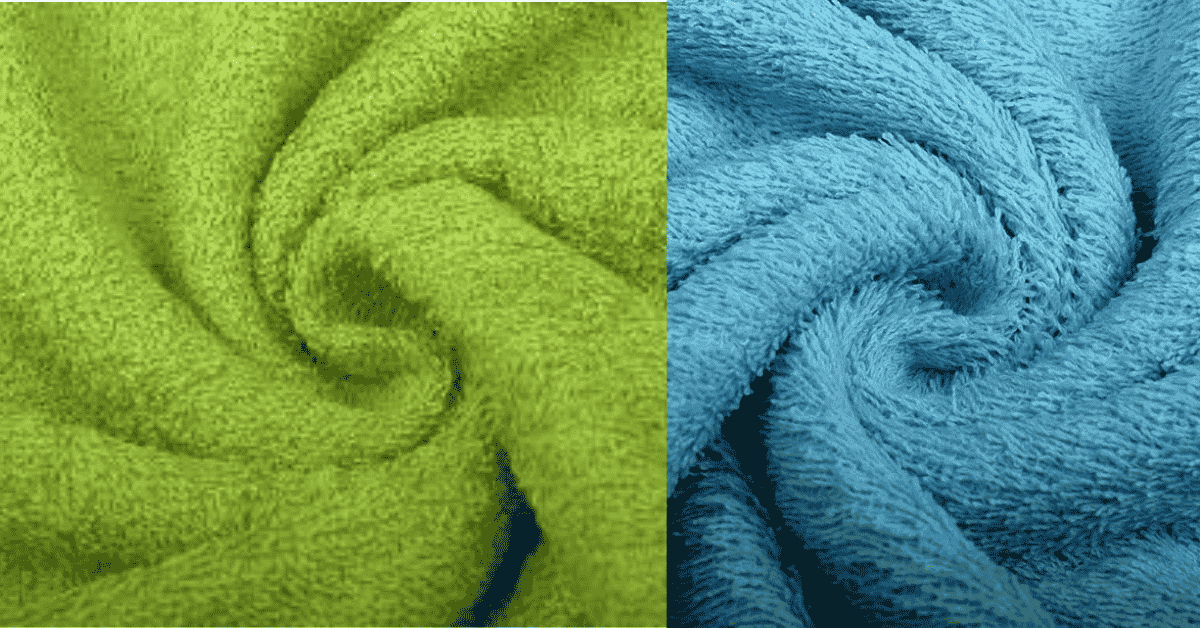
Terry cloth is cotton, woven or knitted with small loops covering one or both sides. Those loops are doing more work than they look like they should. A flat fabric, like a bedsheet, only has one surface to hold water on. Terry cloth has thousands of tiny loops standing up off that surface, and that’s where the extra absorbency actually comes from.
There’s more than one kind, too. Standard woven terry has loops on both sides and is what most bath towels are made from. French terry only loops on one side, with a smoother knit on the other that’s hoodie fabric, not towel fabric. Same basic family, different jobs.
Where the Name Comes From
Terry comes from the French word tirer, meaning to pull or draw out. It refers to how the loops get pulled up while the fabric is being made, instead of cut afterward. The fabric took off in the 1800s once factory looms could produce it cheaply, and honestly, the process hasn’t changed much since then.
Why Terry Cloth Absorbs So Much Water
A flat cotton fabric can only absorb water across its outer surface. Terry cloth’s loops each soak up water individually, not just the base layer underneath them. That’s really the whole reason it dries you off better than a regular piece of cotton ever could.
It’s also why terry cloth ends up in towels, robes, washcloths, and cleaning rags, but almost never in shirts or bedding. A thick terry towel will dry you off faster than a thin one, even when both towels say 100 percent cotton on the tag.
GSM Is Worth Checking Before You Buy
Most towels list a GSM number now, and people usually just skip past it. GSM stands for grams per square meter, basically how heavy the fabric is. Under 300 GSM feels thin fine for a gym bag, not great after a shower. Everyday bath towels usually sit somewhere between 400 and 600 GSM. Past that, you’re getting into thicker, plusher towels, and those take a lot longer to dry between uses.
Where Terry Cloth Shows Up
Towels are the obvious one. But the fabric turns up in plenty of other places:
- Washcloths
- Bathrobes, since it stays warm even when damp
- Baby burp cloths and bibs
- Cleaning rags, especially for glass
- Sweatbands and gym gear
If a hotel towel has ever felt noticeably better than one from a regular store, that’s usually just better cotton and a higher GSM. Nothing unusual about the fabric itself.
What to Look For When Buying
A few things separate towels that last for years from ones that wear out fast.
Cotton quality matters more than most labels suggest. Longer-fiber cotton, like Egyptian or Pima, sheds less and stays soft longer. A tag that says 100 percent cotton doesn’t tell you much on its own plenty of cheap towels say that too.
Loop density matters, separate from GSM. Two towels can share the same GSM number and still feel completely different depending on how tightly those loops are packed.
The hem gets overlooked a lot, but it’s usually the first spot where a cheap towel starts falling apart. A double-stitched edge is a small sign that more care went into how it was made.
Keeping Terry Cloth Soft
New terry cloth actually gets more absorbent after a few washes, not less. So don’t judge one too fast. Skip the fabric softener it coats the loops and cuts down on absorbency, which kind of defeats the entire point. A regular wash cycle, then air-drying or a low tumble dry, keeps things in good shape for years. Washing towels separately from anything with zippers or hooks helps too, since that’s usually what snags and wears out the loops before the fabric does on its own.
FAQs
Is terry cloth only used for towels?
No. It also shows up in robes, baby items, cleaning cloths, and sweatshirts, in its French terry form.
Does a higher GSM always mean a better towel?
Not really. It usually means more absorbency and a plusher feel, but also a longer drying time. It depends on how the towel actually gets used.