Salt Lamp Guide: Best Spots For Maximum Benefit 2026
Let me be upfront about something. I bought my first salt lamp because it was on sale at a HomeGoods and I thought it looked cool. That was it. No research, no plan I just grabbed it, brought it home, and shoved it on a bookshelf in the living room next to some old paperbacks and a plant I was slowly killing.
It sat there for almost four months and I barely noticed it. Turned it on sometimes, forgot about it mostly.
Then I had a bad stretch of sleep like really bad, waking up at 3am and just staring at the ceiling kind of bad and on a whim I moved the lamp into my bedroom. Partly because I’d read something somewhere, partly because I had nothing to lose. Within a couple weeks, the 3am thing started happening less. Could be coincidence. Probably is, at least partly. But I kept the lamp in the bedroom, and I’ve never moved it back.
That’s where I’m coming from with this. Not a wellness guru, not a scientist. Just someone who learned through trial and error that where you put a salt lamp actually changes what you get out of it.
So What Is a Himalayan Salt Lamp, Really?
Okay, basics first because a lot of people own these things without fully knowing what they’re looking at.
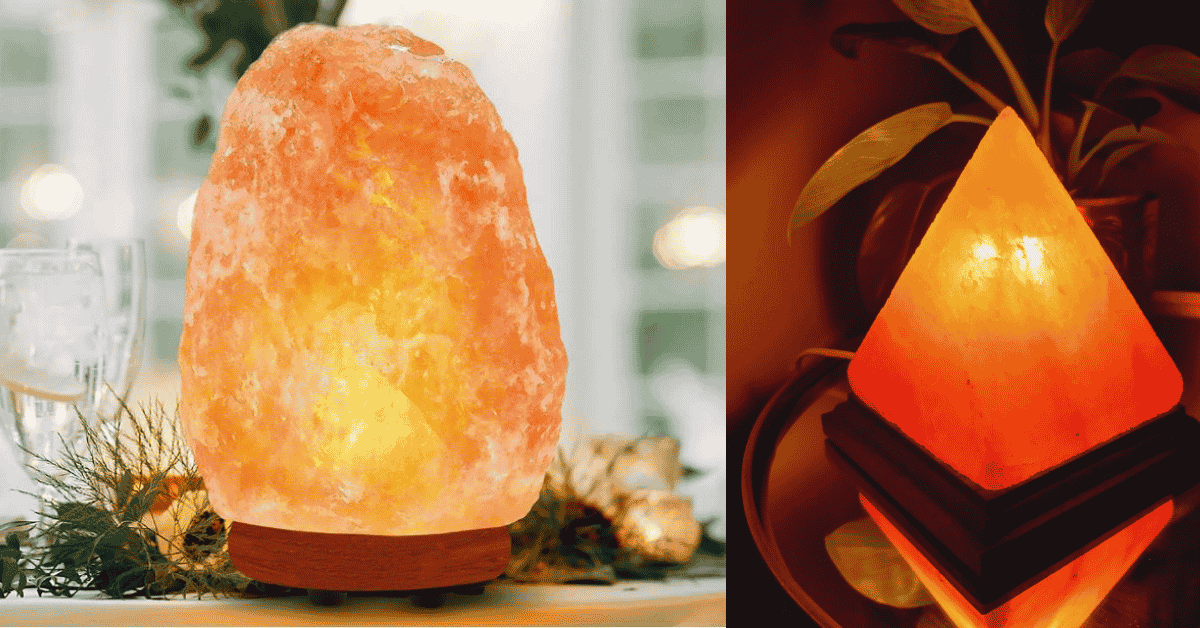
A Himalayan salt lamp is a solid chunk of pink rock salt, mined way over in Pakistan from a place called the Khewra mine. It’s been carved hollow on the inside, a small salt lamp light bulb gets fitted in there, and when you plug it in, the whole crystal heats up and glows from within. The color is hard to describe until you see it somewhere between a campfire and a sunset, this deep warm amber-pink that regular light bulbs just don’t produce.
The bigger conversation around Himalayan salt lamp benefits involves something called negative ions. When salt heats up, there’s a theory that it releases these ions into the surrounding air. Negative ions are naturally high near moving water ocean waves, waterfalls, even a running shower. Most people describe places with lots of negative ions as feeling “fresh” or “alive.” The research on whether a tabletop lamp actually generates enough ions to make a meaningful difference is still kind of murky, honestly. But millions of Americans use these lamps, and the experiences people report aren’t nothing.
Even if the ion stuff turns out to be overstated and it might be the light quality alone is genuinely different from anything else in a typical home. Warm, low, amber. That by itself does something.
Himalayan Salt Lamp Benefits The Real Talk
I want to be straight with you here. The advantages of a Himalayan salt lamp are not going to cure anything or replace any actual medical care. Anyone telling you otherwise is overselling it.
But here’s what people including me actually notice:
Sleep gets easier. Not because salt lamps are magic sleep medicine, but because the warm, dim glow doesn’t mess with your melatonin the way phone screens and overhead lights do. Running one in the bedroom for an hour before you try to sleep is basically just practicing good sleep hygiene with a pretty lamp doing the work.
The air feels different, especially if you run it consistently. Salt is hygroscopic it pulls moisture out of the air, along with whatever is floating in that moisture. Dust, pet dander, pollen. The salt lamp light bulb heats the crystal, the moisture releases back, the particles stay trapped in the salt. I have a dog. I notice a difference when the lamp has been running consistently versus when it hasn’t. My sinuses notice too. Again, not clinical evidence just lived experience.
The room feels calmer. Hard to quantify that, I know. But salt lamp benefits for general atmosphere come up every single time people talk about these things. There’s a reason you see them in every yoga studio, every massage place, every acupuncture waiting room in the country. The environment changes.
Best Places to Put a Salt Lamp Room by Room
Bedroom: Just Put It Here First
If you’ve got one lamp and you’re unsure where it goes bedroom. That’s the answer. Don’t overthink it.
Your bedroom is where you recover. Eight hours of sleep (or however many you’re actually getting) means that room’s environment matters more than anywhere else in your home. The Himalayan salt lamp goes on the nightstand, or on a dresser where you can see it from the bed. You run it for an hour or two before sleep. Your brain starts to associate that warm light with winding down. Over time, that association actually helps.
The salt lamp light bulb situation matters here, and I can’t stress this enough: do not swap in an LED bulb. I know someone who did this thinking it would be more energy efficient and then complained for months that her lamp “stopped working.” It still glowed. But an LED doesn’t produce enough heat to warm the salt crystal. And warming the crystal is the whole thing. Stick with incandescent 15 watts for smaller lamps, 25 for the bigger ones.
Living Room: Counters the Screen Problem
Most of us spend our evenings in the living room doing screen stuff. TV, laptops, phones all of it throwing blue-spectrum light at our faces while we’re trying to wind down. It’s one of the reasons so many people feel weirdly wired at 11pm when they’re also exhausted.
A salt lamp in the living room doesn’t fix that completely, but it adds a warm competing light source that shifts the overall feel of the space. Put it on a side table, a low shelf near the TV, anywhere it’ll be in your general field of vision. The salt lamp benefits here are mostly about the light quality less clinical, more livable.
Size matters more in a living room than in a bedroom. You want roughly one pound of salt crystal for every ten square feet of space. Big open floor plan? Don’t bother with one of those tiny 3-pound decorative ones you need something substantial, or honestly, a couple of lamps spread around.
Home Office: This One’s Underrated
The home office placement is the one I wish someone had told me about sooner. Millions of people in the US are now working from home full-time, and the quality of that space affects focus, mood, and eye fatigue in ways that are easy to ignore until they build up.
Here’s the thing about screen work in a dark or dim room the contrast between a bright monitor and the dark background behind it causes real eye strain over time. Placing a salt lamp off to the side and slightly behind your monitor gives you a soft secondary light source that reduces that contrast. Your eyes aren’t constantly adjusting between bright and dark. By the end of a long work day, the difference is noticeable.
I started doing this about eight months ago and I honestly didn’t think it would matter. Now when I work somewhere without it — a coffee shop, a library I miss it. The room just feels more settled. Harder to explain than it sounds.
Bathroom: Hear Me Out
I know this sounds weird. Stick with me.
The bathroom is actually one of the best places for a salt lamp if you treat it right. Hot shower, soft light, quiet that’s already halfway to a spa. Add a salt lamp on a shelf or the back of the counter, and suddenly your evening shower routine actually feels like decompression instead of just a task to check off.
The humidity thing is real, though. Salt absorbs moisture, so if your lamp is cold and you take a hot steamy shower, it’ll sweat. The solution is easy: keep it plugged in. A warm lamp manages the ambient humidity without drama. Just put it on a coaster or small tray because it may still leave a faint ring on wood or stone surfaces over time.
Keep it away from direct water. Not because it’ll explode or anything but because a lamp that regularly gets splashed is going to slowly dissolve at the base. Common sense stuff.
Kids’ Rooms: Better Than Most Night Lights
A salt lamp as a kid’s night light is one of those ideas that sounds indulgent until you actually try it. The glow is so soft and warm that it doesn’t interfere with sleep the way traditional night lights can. No blue light, no harsh brightness, no flickering. Just a steady amber that says “everything is calm.”
Himalayan salt lamp benefits in a kids’ room also seem to include some air quality stuff parents with kids who get congested at night often report improvement. I can’t tell you exactly why, but it comes up too often to dismiss.
One obvious thing: keep it somewhere the kid can’t reach. Toddlers are curious about everything and a warm chunk of pink salt is basically irresistible to a three-year-old. Put it high up. And yes it’s literally salt, so if they do manage to lick it, they’ll be fine. Just unpleasant.
Your Meditation Corner or Yoga Space
Even if your “meditation corner” is just a rolled-up mat in the corner of your bedroom and a single candle, a Himalayan salt lamp belongs there. The warm light does what no amount of intention-setting can do on its own it physically shifts the atmosphere of the space. Your nervous system reads that warm, low light as a cue to slow down.
Set it somewhere close to eye level when you’re seated on the mat. Let it warm up for 10 or 15 minutes before you start. The difference between doing a breathing practice under a bright overhead light versus the glow of a salt lamp is not subtle. It’s the same reason every spa and wellness studio in America has one.
Practical Things Worth Knowing
Run it as much as you can. This is genuinely the most important maintenance tip. A lamp that stays on 16 or more hours a day stays warm, stays dry, and does its job. One that gets turned on and off constantly in a humid house is going to sweat, drip, and eventually damage the surface it’s sitting on. Get a lamp with a dimmer switch on the cord, turn it way down overnight if you need to, but keep it running.
The right salt lamp light bulb is non-negotiable. Incandescent only. Check the wattage recommendation that came with your lamp usually printed on the bottom and stick to it. Swapping to LED is one of the most common mistakes people make with these.
Clean it every few weeks. Barely damp cloth, wipe it down, then turn it on and let it warm dry completely. That’s all it needs.
Authenticity matters. Real Himalayan salt lamp crystals are dense and noticeably heavy for their size. The color varies naturally within a single piece pale pink, deep amber, sometimes almost orange in patches. If a lamp feels hollow or lightweight, or the color looks like it was airbrushed on uniformly, walk away. Counterfeits are everywhere, and they don’t give you the same result.Quick FAQs
How long should my salt lamp run each day?
Honestly, as long as possible. Sixteen hours minimum is the general guidance. The longer it runs, the better it manages moisture and the more effective it is.
Is it okay to leave it on all night?
Yes. Use the correct bulb, make sure it’s on a stable surface, and turn the dimmer down low if you’re a light sleeper. Many people run theirs 24/7 with no issues.
Why is mine dripping water?
It’s been sitting cold in a humid room and absorbed too much moisture. Turn it on it’ll warm up and evaporate the water. Put a coaster underneath while it does. This is normal, not a defect.
What bulb do I actually need?
Incandescent. Usually 15W for smaller lamps, 25W for larger. Check your lamp’s base or packaging. Never use LED it doesn’t generate enough heat.
How do I know if mine is the real thing?
Pick it up. A real Himalayan salt lamp is surprisingly heavy for its size. The color varies naturally across the surface. If it’s uniform-looking and light, it’s probably not authentic. Real ones also tend to sweat slightly in humid conditions which fakes usually don’t, because they’re not actual salt.